Why Space Management is the Real Secret to Enjoyable Car Camping
⚡ Quick Takeaway
The ultimate car camping packing list prioritizes collapsible, multi-functional gear that maximizes interior vehicle volume without sacrificing sleep quality or camp kitchen performance.
Beginners frequently overpack bulky household items, turning their trunk into a chaotic maze. By switching to nesting systems, compact insulation, and modular storage bins, you can fit an entire weekend campsite into a standard sedan or compact crossover with room to spare.
Car camping offers the ultimate freedom to explore national parks, coastal bluffs, and state forests without the grueling physical toll of ultralight backpacking. However, the most common beginner mistake is confusing vehicle capacity with unlimited cargo room. Packing bulky residential pillows, rigid kitchen pots, and oversized steel frame chairs turns your vehicle into a cluttered headache where finding a simple headlamp takes twenty minutes of rummaging.
Smart car campers treat their trunk like high-efficiency real estate. By selecting gear specifically engineered to fold down flat, nest inside companion pieces, or serve dual purposes, you preserve clear rear visibility and eliminate the exhausting routine of unpacking half your car just to set up a sleeping cot.
Below is the definitive, field-tested Car Camping Packing List tailored for beginners who want maximum comfort at camp with minimal trunk clutter.
At-a-Glance: 10 Space-Saving Essentials Specification Matrix
Before shopping or loading your vehicle, review this quick reference matrix comparing volume footprint, weight class, and functional payoff for each essential piece on your Car Camping Packing List.
The Core Sleep System: Pack Down Small Without Sacrificing Warmth
A great camping weekend begins and ends with restorative sleep. The instinct for most beginners is to throw heavy quilts, queen-size double-decker air mattresses, and giant bedroom pillows into the backseat. Unfortunately, traditional PVC vinyl air mattresses take up immense cubic storage and actively leech body heat into the cold ground, leaving you shivering at 3:00 AM.
The solution lies in dedicated technical sleep gear designed for compact packing efficiency:
- Self-Inflating Insulated Sleeping Pads: Brands like Therm-a-Rest and NEMO engineer 3-inch to 4-inch thick hybrid air-and-open-cell foam mats. They pack down to the size of a standard paper towel roll while providing an R-value of 4.0 or higher to block ground frost.
- Compression Sack Sleeping Bags: Choose a 20°F to 35°F rated synthetic or treated down bag with a durable compression sack. Using the 4-way compression straps can reduce a 15-liter stuffed bag down to under 6 liters.
- Compressible or Hybrid Pillows: Replace bed pillows with memory-foam chip pillows that pack down into their own internal pocket or an ultralight inflatable pillow layered under a soft fleece sweater.
💡 Pro Tip: The Sleeping Bag Stuffer Method
Never fold or roll modern sleeping bags. Stuffing them randomly into their compression sacks preserves the loft of the insulation fibers and allows the sack to compress much tighter and faster without stressing factory seams.
The Compact Camp Kitchen: Nesting Cookware and Collapsible Utilities
The camp kitchen is historically where car campers waste the greatest percentage of vehicle space. Bringing standard home frying pans with fixed long handles, loose ceramic mugs, and rigid dish basins creates bulky dead space in your trunk. Streamlining your camp culinary kit requires choosing interlocking and collapsible gear.
Space-Saver: All-in-One Nesting Sets
Pots, bowls, plates, and removable silicone handles fit like Russian nesting dolls into a single 2.5L stockpot, taking up zero excess volume.
Space-Waster: Household Pots & Pans
Non-removable long metal handles create awkward angles, rattle against other gear, and consume 3x more storage space than camping sets.
Pair your nested cookset with a compact single or dual-burner isobutane stove (such as a Camp Chef Everest or a Jetboil Genesis system) rather than a giant vintage cast-iron unit unless you are cooking for a large group. For water management, switch from rigid 5-gallon blue plastic jugs to collapsible silicone or food-grade TPU water cubes that flatten down to less than 1 inch when empty.
⚠️ Caution: Watch the Food Storage Regulations
If you are camping in bear country (such as Yosemite, Glacier, or the Great Smoky Mountains), all scented items, food, and cooksets must fit inside campground bear lockers or hard-sided vehicles at night. Packing in compact modular bins makes late-night lock-up effortless.
Step-by-Step: How to Pack Your Vehicle Trunk Like an Outdoor Pro
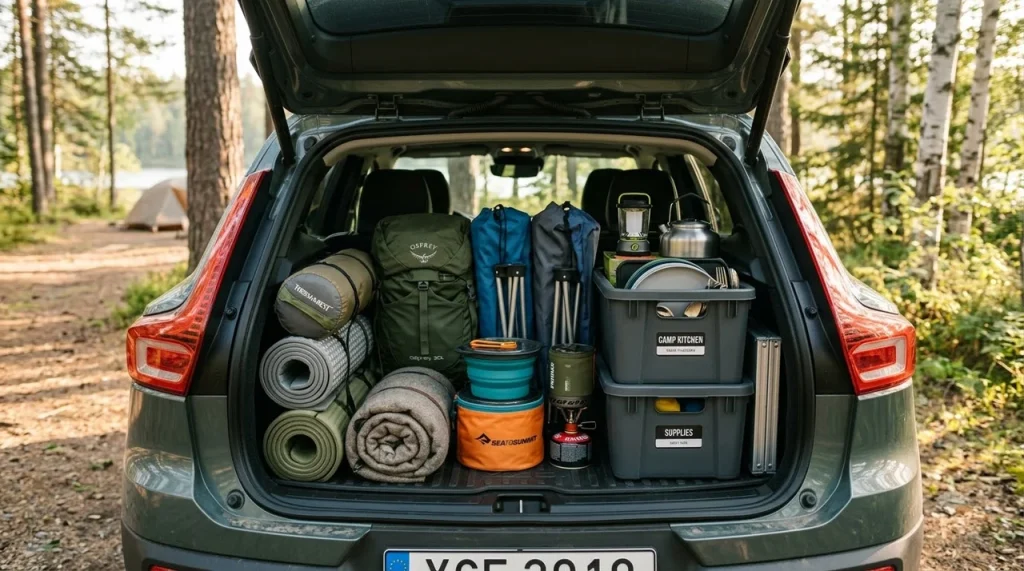
Having the best compact equipment on your Car Camping Packing List is only half the battle. How you load that gear into your vehicle determines how quickly you can set up shelter before sunset or grab a rain jacket during a sudden mountain downpour. Follow this standard reverse-order packing protocol:
Bottom Layer: Heavy Storage Totes & Heavy Cookware
Place heavy plastic tote bins directly against the rear seatback on the vehicle floor. This keeps your vehicle’s center of gravity low and prevents heavy objects from sliding forward during sudden braking.
Mid-Trunk: Cooler and Sleep System Bags
Position your cooler within direct reach of the rear liftgate or side door for quick road-trip snack access. Slot sleeping bags and insulated pads into the perimeter gaps around the solid totes.
Top Layer: Shelter, Rain Gear, and Camp Chairs
Place your tent, ground tarp, rain shell, and folding chairs at the very top of your load. When you arrive at camp in the rain or dusk, you can immediately pitch shelter without unpacking your entire vehicle.
The Ultimate Beginner Car Camping Checklist
Use this streamlined checklist before zipping up your vehicle trunk to guarantee zero forgotten necessities while staying under your vehicle’s cargo volume limits.
📋 Space-Saving Car Camping Checklist
✔ Sleep: 30°F sleeping bag in compression sack + insulated hybrid pad + camp pillow
✔ Kitchen: Compact stove, nested anodized pot set, folding utensils, collapsible dish basin
✔ Hydration: 5-gallon collapsible spigot water container + personal insulated bottles
✔ Lighting: 1x 300-lumen rechargeable LED lantern + 2x hands-free headlamps
✔ Furniture: High-back lightweight backpacking-style folding chairs
✔ Clean-Up: Biodegradable soap (CampSuds), quick-dry microfiber towel, 3x heavy trash bags
✔ Safety & Navigation: Waterproof first-aid kit, multi-tool, power bank, offline trail maps
Expert Recommendations and Practical Verdict
When building your outdoor kit, resist the urge to buy the biggest or cheapest gear available in big-box department stores. Oversized 6-person cabin tents and steel-pole folding armchairs might seem like budget bargains, but their bulk will quickly overwhelm a standard car trunk, adding unnecessary stress to every packing and unpacking cycle.
Instead, invest in mid-range outdoor gear that balances comfort and packability. A three-person tent shared between two people provides ample interior headroom while folding down to under 22 inches in length. Standardizing your gear into two transparent storage bins (one for camp kitchen, one for hardware and lighting) allows you to leave your vehicle packed and ready for spontaneous weekend getaways in under fifteen minutes.
Focus on quality over volume, pack modularly, and keep your camp setup clean and clutter-free for the best outdoor experience.
Frequently Asked Questions
What size tent is best for space-saving car camping?
For two adults, a 3-person dome tent is ideal. It provides enough floor space (roughly 40-45 sq ft) for gear storage inside while packing down into a compact 20×7 inch stuff sack with aluminum poles.
Can I use regular bed blankets instead of a camping sleeping bag?
While possible for warm summer nights, household cotton blankets are bulky, heavy, and trap moisture from humidity. A dedicated synthetic or down camping sleeping bag compresses to a fraction of the size and retains warmth down to freezing temperatures.
How much water should I pack for a weekend car camping trip?
Plan for 1 to 2 gallons of water per person per day to cover drinking, cooking, and light dish cleaning. A 5-gallon collapsible jug easily supplies a duo for an entire two-night weekend without taking up permanent trunk volume when empty.
What is the best way to keep food cold without a huge cooler?
Pre-chill your soft-sided cooler with ice packs 2 hours before packing. Freeze gallon water bottles to act as high-efficiency ice blocks that you can drink as they melt, and pack high-density vacuum-sealed ingredients to eliminate wasted air space.
References and Links
- REI Co-op: Camping Essentials Checklist
Comprehensive outdoor gear checklists and expert recommendations for car camping and backcountry setups. - National Park Service: Camping 101 Guide
Official US National Park guidelines on campsite safety, food storage regulations, and trip preparation. - L.L.Bean: What to Pack for Car Camping
Practical packing advice and gear selection guides for beginner and family campground trips.
👉 Related: Camp Kitchen Organization: Essential Gear and Storage Setup
👉 Related: Compact Camp Kitchen Cookware: Essential Outdoor Cooking Gear