Why Switch to Non-Toxic Cleaning in Your Home?
Quick Summary: The Power of Green Cleaning
Adopting natural cleaning hacks for a chemical-free home eliminates harsh indoor airborne toxins, protects your pets and family, and significantly lowers household maintenance costs using simple pantry essentials like white vinegar, baking soda, and lemons.
Many conventional cleaning sprays contain synthetic fragrances, ammonia, and volatile organic compounds (VOCs) that irritate the respiratory tract and trigger skin sensitivities. By choosing simple, bio-based ingredients, you create a safer living environment without sacrificing cleaning power.
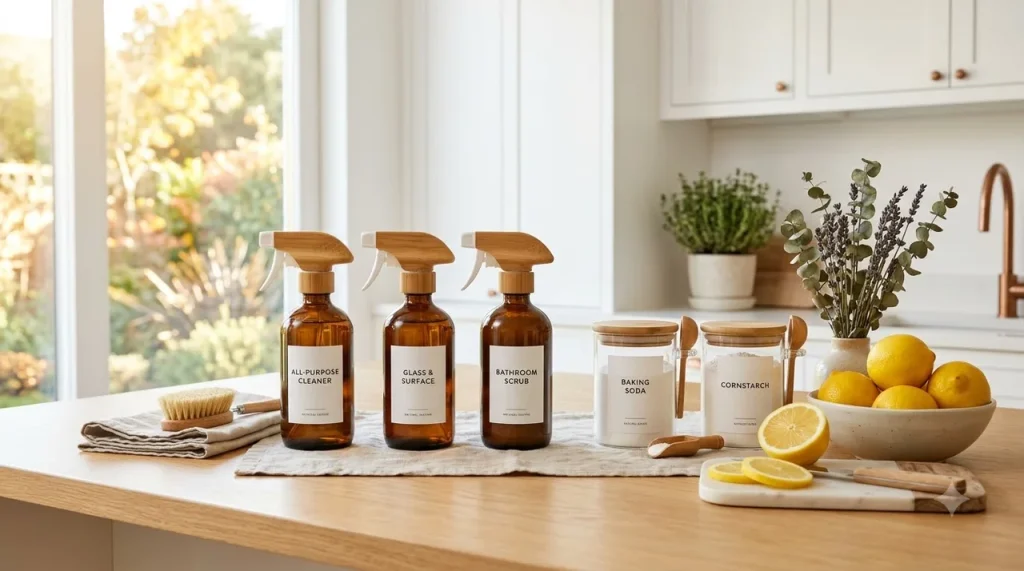
Essential Pantry Ingredients & Their Cleaning Superpowers
Before starting your DIY cleaning routine, assemble these multipurpose, natural powerhouses:
Distilled White Vinegar
Acidic base that dissolves mineral buildup, cuts soap scum, and eliminates lingering odors.
Baking Soda
Mild abrasive deodorizer that lifts burnt grease, scrubs tiles, and freshens carpets.
Fresh Lemon Juice
Natural bleaching agent with citric acid to break down water stains and impart a fresh aroma.
Castile Soap
Plant-derived surfactant that binds to dirt and grease for effortless daily wipe-downs.
Step-by-Step DIY Multi-Surface Cleaner Recipe
Follow this simple 4-step guide to craft your go-to everyday all-purpose spray using proven natural cleaning hacks for a chemical-free home:
Pour 1 cup of distilled water and 1 cup of white vinegar into a 16 oz dark glass spray bottle.
Drop 15 drops of tea tree oil or sweet orange oil for antibacterial properties and a clean scent.
Close the spray nozzle tightly and gently shake the bottle before every single application.
Mist over countertops, stainless steel, and glazed tiles, wiping clean with a microfiber cloth.
Room-by-Room Natural Cleaning Checklist
Keep your whole house spotless with these area-specific natural cleaning checklists:
Kitchen & Bath Checklist
- ✔ Garbage Disposal: Grind halved lemons and ice cubes to sharpen blades and deodorize.
- ✔ Oven Doors: Apply a paste of baking soda and water; let sit for 30 minutes before wiping.
- ✔ Shower Heads: Tie a bag of warm vinegar around the fixture overnight to dissolve calcium deposits.
- ✔ Grout Lines: Scrub with baking soda paste and hydrogen peroxide for bright lines.
Important Safety Rules: What NEVER to Mix
Safety Warning: Incompatible Ingredients
Never combine bleach with vinegar or ammonia, as it produces toxic chloramine gas. Also, avoid mixing hydrogen peroxide and vinegar in the same bottle to prevent peracetic acid formation.
Additionally, avoid using acidic solutions like vinegar or lemon juice on natural stone surfaces (such as granite, marble, or travertine), as the acid can etch and dull the polished finish over time. For natural stone, use mild castile soap diluted in warm water instead.
Sustainable Habits for Long-Term Home Maintenance
Maintaining a clean home naturally is about routine consistency rather than deep scrubbing marathons. Integrate these small daily habits:
- Daily Squeegee Routine: Wipe down shower walls immediately after use to stop soap scum before it builds up.
- Evening Sink Polish: Sprinkle a pinch of baking soda into the stainless steel sink, scrub lightly, and rinse for an instant shine.
- Air Circulation: Open windows for 10 minutes every morning to purge indoor VOCs and exchange stale air with fresh oxygen.
By consistently applying these natural cleaning hacks for a chemical-free home, you protect your wellbeing, reduce plastic waste, and maintain a sparkling living space effortlessly.
Frequently Asked Questions
Can vinegar disinfect surfaces as well as commercial bleach?
While distilled white vinegar kills many household bacteria (like E. coli and Salmonella) due to its acetic acid content, it is not registered as a hospital-grade disinfectant. For high-risk areas, use 3% hydrogen peroxide or medical-grade alcohol after basic soap cleaning.
How do you eliminate the strong vinegar scent after cleaning?
The sharp vinegar scent naturally evaporates within 20 to 30 minutes. You can also infuse your vinegar with fresh orange, lemon, or grapefruit peels in a mason jar for two weeks before diluting it to give it a pleasant citrus aroma.
Are DIY natural cleaners safe around dogs and cats?
Most pantry cleaners like baking soda and vinegar are non-toxic for pets. However, be cautious with essential oils (like tea tree, peppermint, and eucalyptus), as some can be harmful to pets if ingested or diffused in poorly ventilated rooms.
References and Links
- EPA Safer Choice Program
Official US Environmental Protection Agency guidance on safe and chemical-free household cleaning alternatives.
👉 Read Next: Small Kitchen Storage Ideas: 5 Hacks to Maximize Space