Why Camp Kitchen Organization Transforms Outdoor Cooking
Quick Summary: Efficient camp kitchen organization relies on a structured modular storage system (such as a 2-bin or chuck box framework) paired with a distinct 3-zone campsite layout (Prep, Cook, Wash). Separating dry goods, cookware, and sanitation turns chaos into seamless outdoor meal prep.
Cooking outdoors should be one of the greatest joys of any camping trip, yet a cluttered campsite quickly turns meal preparation into a frustrating treasure hunt. Digging through overloaded plastic bins for a single spice shaker or discovering that your cooking oil leaked all over your sleeping pads wastes valuable relaxation time. Implementing an intentional camp kitchen organization system solves these headaches before you even leave your driveway.
By establishing dedicated containers, nesting cookware, and maintaining an always-ready pantry bin, you reduce pack time on Friday afternoon and eliminate Sunday clean-up dread. Whether you are car camping with family or overlanding along remote forest service roads, a dialed-in camp kitchen provides the speed, cleanliness, and comfort of your home kitchen under the open sky.
The 3-Zone Framework: Structuring Your Campsite Galley
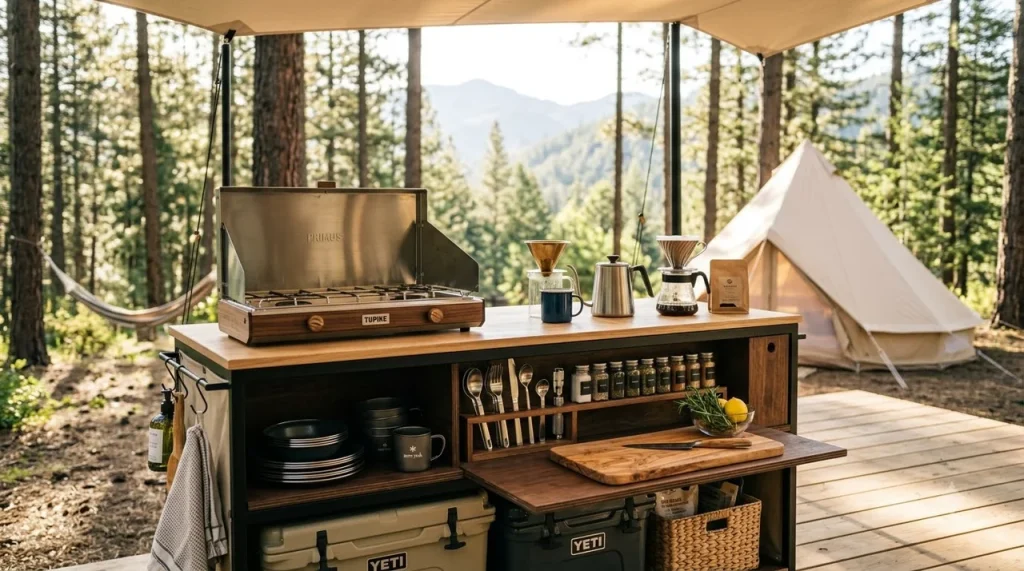
Professional camp cooks and experienced outdoor guides design their cooking stations around functional workflows. Separating your physical layout into distinct zones prevents cross-contamination, eliminates bottlenecks, and keeps hot cooking surfaces away from high-traffic campsite paths.
The Essential Camp Kitchen Work Triangle
- 1. The Prep & Storage Zone: Positioned adjacent to your cooler and dry storage bins. This surface holds your cutting boards, prep knives, seasoning kit, and food ingredients.
- 2. The Hot Cooking Zone: Dedicated solely to your 2-burner propane stove, grill grate, or Dutch oven. It must be level, shielded from wind gusts, and clear of overhead tree branches or flammable gear.
- 3. The Cleaning & Sanitation Station: Kept at least 6 to 10 feet downwind from cooking surfaces. Houses your wash basin, biodegradable soap, drying rack, and trash bag.
Maintaining physical separation between these three zones ensures that meal preparation flows naturally from raw ingredients to cooked dishes and straight into an effortless clean-up routine.
Storage Solutions Compared: Chuck Boxes vs. Modular Bins
Choosing the right container system forms the backbone of successful camp kitchen organization. Different camping styles demand different balances of weight, durability, and accessibility.
| Storage System | Best For | Pros | Cons |
|---|---|---|---|
| DIY Chuck Box / Patrol Box | Car Camping & Overlanding | All-in-one foldout workstation, dedicated shelves | Heavy, bulky to hoist into trunk |
| Heavy-Duty Modular Totes | Weekend Campers & Small SUVs | Stackable, weatherproof, lightweight handling | Requires unstacking lids to access gear |
| Soft Sided Organizers / Duffles | Compact Cars & Minimalists | Pliable shape, zippered pouches, easy carrying | Lacks crush protection for fragile items |
Pro Tip: Opt for clear plastic internal caddies or label each container with water-resistant grip tape. Knowing exactly which bin holds the can opener or matches saves endless frustration in low-light conditions.
Step-by-Step Guide to Packing an Always-Ready Kitchen Bin
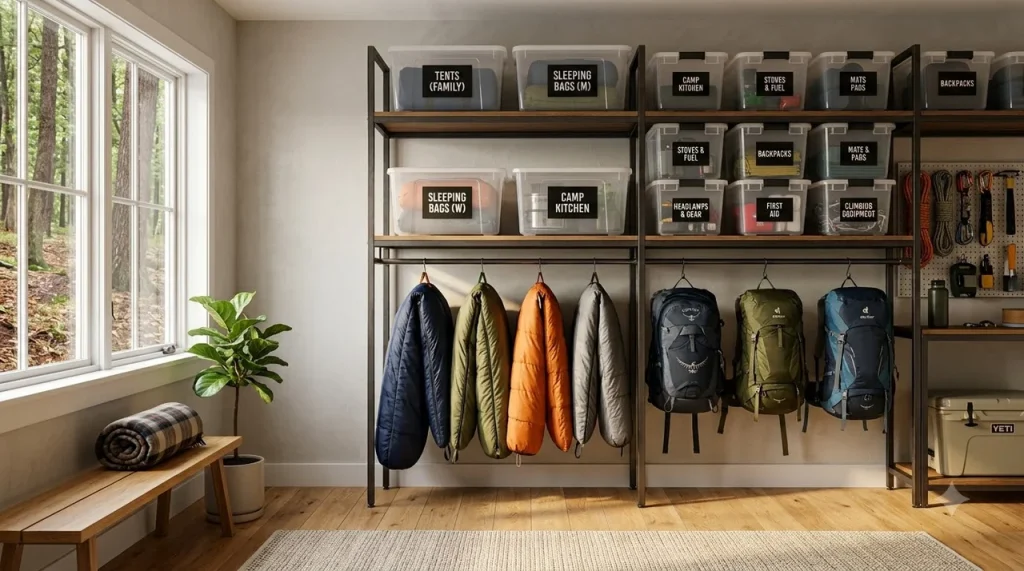
The secret to stress-free weekend camping is the ‘grab-and-go’ kitchen bin. As you Organize and Maintain Camping Gear: Smart Home Storage in your garage or closet, follow this step-by-step assembly process to build a modular system that stays packed and ready inside your home or garage.
Place heavy items flat against the bottom of the container to keep the center of gravity stable. Packing a dedicated set of Compact Camp Kitchen Cookware: Essential Outdoor Cooking Gear ensures that pots, pans, and kettles nest tightly without rattling.
Insert your utensil roll (tongs, spatulas, chef knife with sheath), enamel plates, insulated tumblers, and bowl sets snugly into the middle cavity.
Store your sealed spice kit, cooking oils, matches, headlamps, and instant coffee on top so you can whip up snacks or breakfast without unloading the entire box.
Attach a mesh organizer to the underside of the lid for biodegradable soap, quick-dry microfiber dish towels, sponges, and trash bags.
Essential Gear Checklist for a Seamless Camp Kitchen
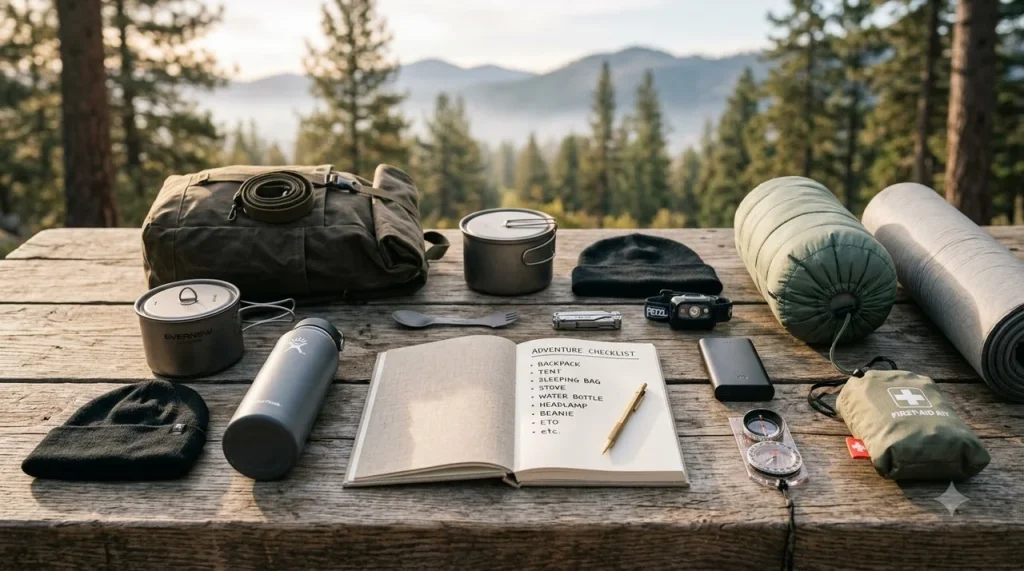
Before hitting the road, run through this comprehensive checklist to guarantee you have all vital tools without packing unnecessary kitchen clutter.
Camp Kitchen Essentials Checklist
“The mark of an experienced outdoor cook is not the number of gadgets in their bin, but how efficiently each single tool performs multiple campsite tasks.”
Leave No Trace Clean-up and Camp Maintenance
Proper camp kitchen organization extends beyond cooking into responsible campsite hygiene and wildlife safety. Practicing ethical waste disposal protects local ecosystems and keeps curious critters far from your sleeping quarters.
The 4-Step Leave No Trace Dishwashing System
- Scrape: Remove all food remnants into a dedicated trash bag before water touches the cookware.
- Wash: Use warm water and a few drops of biodegradable soap in Basin #1.
- Rinse: Submerge dishes in clean, warm rinse water in Basin #2.
- Dispose: Strain out remaining greywater particulates and broadcast water at least 200 feet from natural water sources.
Always pack away all food storage containers, coolers, and scented items inside a hard-sided vehicle or bear canister before heading out on hikes or turning in for the night.
Frequently Asked Questions
What is the best storage box to use for a DIY camp kitchen?
Heavy-duty, weather-resistant plastic toolboxes (such as Ridgid or DeWalt modular boxes) or rugged storage totes (like Front Runner Wolf Packs or Rubbermaid Action Packers) offer the best durability, dust seals, and stackability for camp kitchen organization.
How do you organize spices and cooking oils for camping?
Use leakproof Nalgene travel bottles for cooking oils and multi-compartment pill organizers, magnetic spice tins, or tic-tac dispensers for daily spices to save space and prevent accidental spills inside your gear bins.
How do you keep animals and bugs away from your camp kitchen?
Always store food, scented hygiene items, and trash in airtight, locked containers or inside your vehicle. Clean cooking surfaces immediately after eating, scrape food scraps into sealed bags, and never leave food unattended at your campsite.
What size cooler is recommended for a weekend camping trip?
A 45-quart to 55-quart rotomolded cooler is typically ideal for a family of 2 to 4 campers on a 2-3 day trip, providing adequate space for pre-chilled meals, drinks, and a 2:1 ice-to-food ratio.
References and Links
- REI Expert Advice: How to Set Up a Camp Kitchen
Comprehensive guide on selecting cookware, establishing camp cook stations, and managing outdoor food storage. - Leave No Trace: The 7 Principles of Outdoor Ethics
Official guidelines on campsite sanitation, waste disposal, and wildlife safety practices.