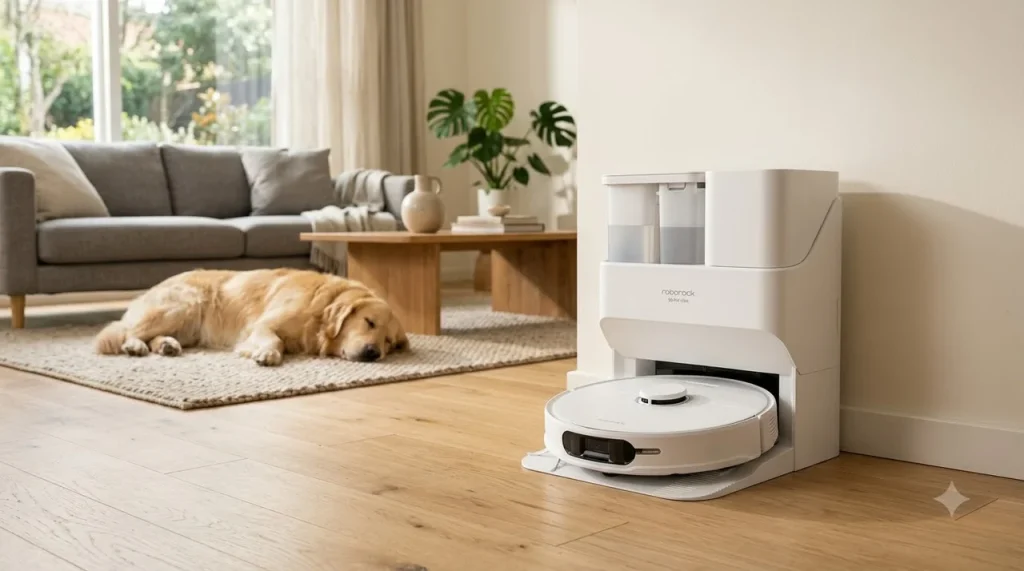
The Direct Verdict: Which Truly Saves More Time?
⚡ Quick Takeaway
A robot vacuum with mop saves pet owners an average of 3.5 to 5 hours per week on routine hair and paw print upkeep, provided you choose a model with an auto-empty and auto-washing base station.
While traditional upright or stick vacuums deliver superior high-pile carpet agitation and edge suction, autonomous combos eliminate the daily chore of sweeping fur tumbleweeds and wiping muddy tracks off hard flooring.
Pet parents understand the endless battle against shedding coats, dander drift, and muddy paw prints brought in after rainy walks. For decades, the standard response was pulling out a heavy 15-lb upright vacuum every evening. Today, automated robot vacuums with active spinning or vibrating mops promise complete hands-off floor care.
However, automation is not completely zero-effort. Between clearing floor clutter, detangling hair from roller bearings, and refilling clean water tanks, the real question is whether the maintenance of a smart robot outweighs the manual labor of pushing a traditional vacuum cleaner.
Side-by-Side Comparison: Pet Hair, Mopping, & Maintenance
To determine where your time actually goes, let us compare both cleaning methods across critical pet-care performance metrics:
Why the Robot Mop Combo Wins for Daily Shedding Cycles
The true superpower of a robot vacuum with mop is not sheer suction power; it is unwavering consistency. In homes with heavy-shedding breeds like German Shepherds, Golden Retrievers, or Maine Coons, fur accumulates continuously throughout the day.
When using a manual upright vacuum, homeowners typically clean on a fluctuating schedule—perhaps every other day or only during intensive weekend resets. This creates a sawtooth cycle where hair and dander pile up between sessions.
💡 Pro Tip
Schedule your robot vacuum to run twice daily during peak molting seasons (spring and fall): once at 9:00 AM right after morning walks, and a secondary high-traffic run around the entryway at 4:00 PM.
Automated scheduling captures fur before it can migrate under baseboards, settle into sofa upholstery, or get kicked up into central air return vents.
The Hidden Time Costs: What Robot Brands Rarely Tell You
While a robot vacuum handles the physical sweeping, it introduces unique micro-tasks that pet owners must account for when calculating time efficiency:
Robot Vacuum Pros
Completely autonomous daily dust & paw print cleaning, cleans under low furniture (3.8 inch clearance), scheduled runs while you are away at work.
Robot Vacuum Hidden Demands
Requires clutter-free floors (dog toys/cables), dirty water tank rinsing to avoid mildew odor, and weekly roller despooling for long pet hair.
⚠️ Caution: The Pet Waste Risk
If your pet is prone to indoor accidents or upset stomachs, never run an automated robot vacuum without AI RGB obstacle cameras capable of active pet-waste recognition.
Optimizing Your Pet Cleaning Routine: A 4-Step Strategy
To get the absolute highest return on investment and time savings, follow this hybrid workflow implemented by seasoned multi-pet households:
Set Automated Daily Hard-Floor Missions
Program your robot mop combo to clean hard floors (kitchen, hallway, living areas) 5 to 7 days per week with medium water flow and standard suction.
Define No-Mop Zones Over Area Rugs
Use the LiDAR smartphone app mapping to create strict no-mop boundaries or enable automatic mop-plate lifting (10mm to 15mm clearance) so wet pads never soak plush rugs.
Conduct a 5-Minute Weekend Station Clean
Empty the wastewater basin, add pet-safe enzymatic floor cleaner to the fresh tank, and inspect the main roller brush for tangled fur.
Deploy the Traditional Vacuum for Spot & Stair Duty
Reserve your cordless stick or corded upright vacuum for a quick 10-minute pass on carpeted stairs, baseboards, and couch cushions every other week.
Essential Buyer Checklist for Pet Owners
If you are investing in a robot vacuum with mop to cut cleaning hours, ensure the model you select includes these non-negotiable features:
📋 Must-Have Robot Mop Specs for Pet Homes
✔ Self-Emptying Dust Station (2.5L+ Capacity): Holds up to 60 days of compacted pet fur without manual dumping.
✔ Heated Air Mop Pad Drying (113°F to 130°F): Prevents damp mop pads from developing musty bacterial odors.
✔ High Suction Rating (5,000 Pa to 10,000+ Pa): Extracts fine cat litter and embedded dander from tile grout and carpets.
✔ AI Camera Obstacle Avoidance: Identifies chew toys, dropped treats, cords, and unexpected pet messes.
Final Verdict: The Ideal Floor Care Setup for Pet Homes
When comparing a robot vacuum with mop vs a traditional vacuum, the robot is not an absolute replacement—it is a drastic labor-reducer. It converts what used to be 4 to 6 hours of weekly manual sweeping and mopping into just 15 minutes of station maintenance.
For pet owners whose homes are at least 50% hard flooring (hardwood, laminate, or tile), an all-in-one robot vacuum with mop is undeniably the biggest time-saving home appliance since the dishwasher. Pair it with an inexpensive cordless stick vacuum for stairs and furniture, and you achieve a perpetually spotless home with minimal effort.
Frequently Asked Questions
Can a robot vacuum and mop completely replace my traditional vacuum if I have pets?
For about 85% to 90% of your daily floor cleaning, yes. However, you will still need a lightweight stick or upright vacuum for carpeted stairs, car interiors, and sofa cushions where robots cannot reach.
How often do you have to clean hair out of a robot vacuum brush?
On modern robot models equipped with solid rubber rollers or anti-tangle cutting blades, roller maintenance is needed only once every 2 to 4 weeks. Traditional bristle rollers require weekly untangling in multi-pet homes.
Do robot vacuum mops smell bad from cleaning up pet messes?
They only develop odors if the mop pads remain wet in a damp tray. Choosing an all-in-one base station with automatic hot-air drying (typically 113°F to 130°F) and emptying dirty water tanks weekly completely eliminates smell issues.
Is a robot vacuum worth it for dog hair on thick carpets?
Robot vacuums excel on low-pile and medium-pile carpets, but plush or high-pile shag carpets still require the deep motor agitation of a corded upright vacuum with high airflow (CFM).
References and Links
- Consumer Reports – Best Vacuum Cleaners for Pet Hair
Comprehensive lab testing benchmarks comparing suction, pet hair pickup, and filtration efficiency across robotic and upright vacuum models. - Vacuum Wars – Robot Vacuum Testing Database & Analysis
Independent performance metrics evaluating obstacle avoidance, mop scrubbing power, and airflow data for smart floor cleaners.
👉 Related: Smart Plug Automations: Cut Phantom Power & Automate Routines
👉 Related: Indoor Air Quality Improvement: Home Ventilation Guide