Why Strategic Gear Storage Protects Your Outdoor Investment
Quick Answer: To organize and maintain camping gear at home effectively, use vertical wall systems, heavy-duty clear storage bins, and dedicated climate-controlled zones. Proper drying, cleaning, and loose storage of sleeping bags and pads will double their lifespan while cutting trip packing time in half.
Outdoor equipment is a significant investment. When you organize and maintain camping gear properly at home, you prevent mildew, material degradation, and the frustration of missing essentials right before a weekend getaway in the mountains.
Most gear damage happens not on the trail, but in dark, damp basements or scorching hot attics. Establishing a designated, organized home base ensures every tent, stove, and sleeping pad stays in peak condition for years of reliable adventure.
Zone-Based Storage: Designing the Ultimate Gear Locker
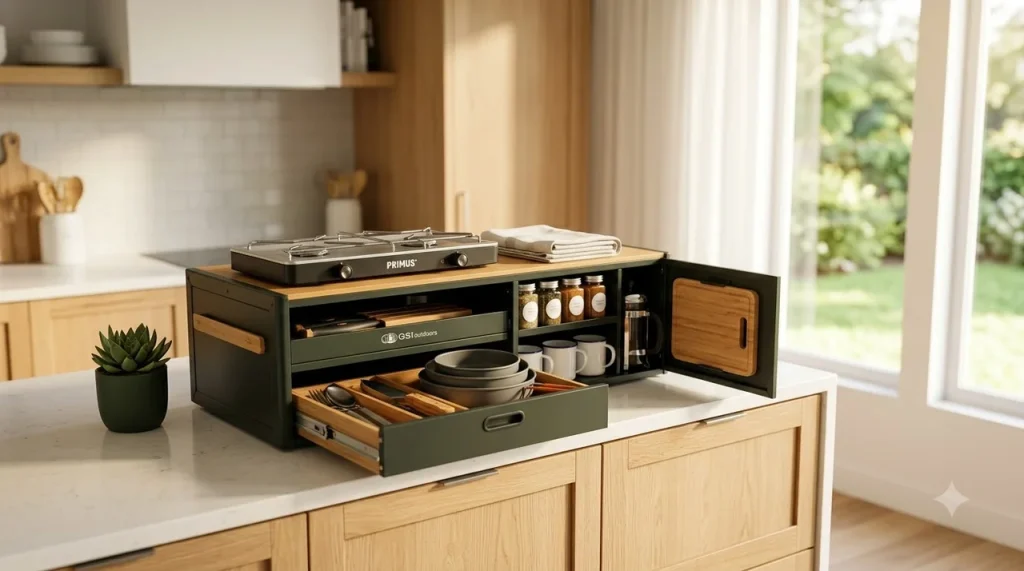
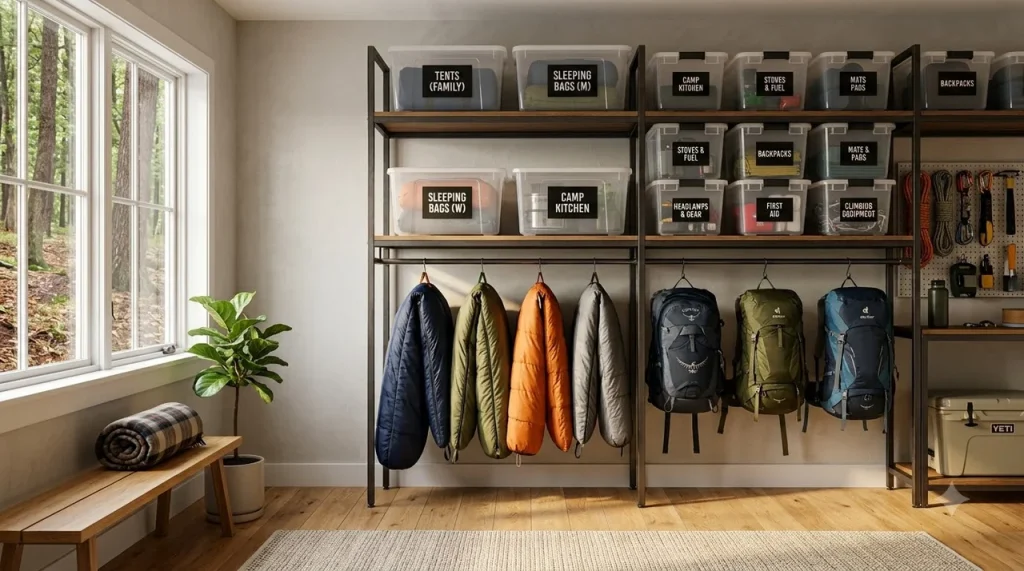
A modular, zone-based system lets you grab exactly what you need without rummaging through endless containers. Here is how top storage systems compare for different spaces:
Step-by-Step Post-Trip Routine for Flawless Gear Maintenance
The golden rule to organize and maintain camping gear is never storing equipment dirty or wet. Follow this structured 4-step reset routine within 24 hours of returning home:
Pitch your tent loosely in a ventilated room or shaded garage. Allow moisture to evaporate completely to prevent polyurethane coating breakdown and mildew growth.
Wash cookware, dry stoves completely, and backflush micro-filters with chlorine-free water to eliminate bacteria before long-term storage.
Brush sand from zippers, patch minor fabric tears with tenacious tape, and remove batteries from headlamps to prevent corrosive acid leaks.
Replace used matches, fuel canisters, and bandages immediately. Store items back in their designated labeled clear bins.
Critical Mistakes That Ruin High-End Gear in Storage
Even experienced backpackers make subtle storage mistakes that degrade fabrics and ruin insulation.
Never store down or synthetic sleeping bags tightly packed inside compression stuff sacks for longer than a few days. Constant compression breaks down synthetic fibers and causes down clusters to clump, permanently destroying thermal efficiency and warmth ratings.
Similarly, keep self-inflating sleeping pads unrolled with their valves open under your bed or behind a closet door. This keeps open-cell foam resilient and stops mold from growing in trapped condensation.
Essential Checklist for Home Gear Organization
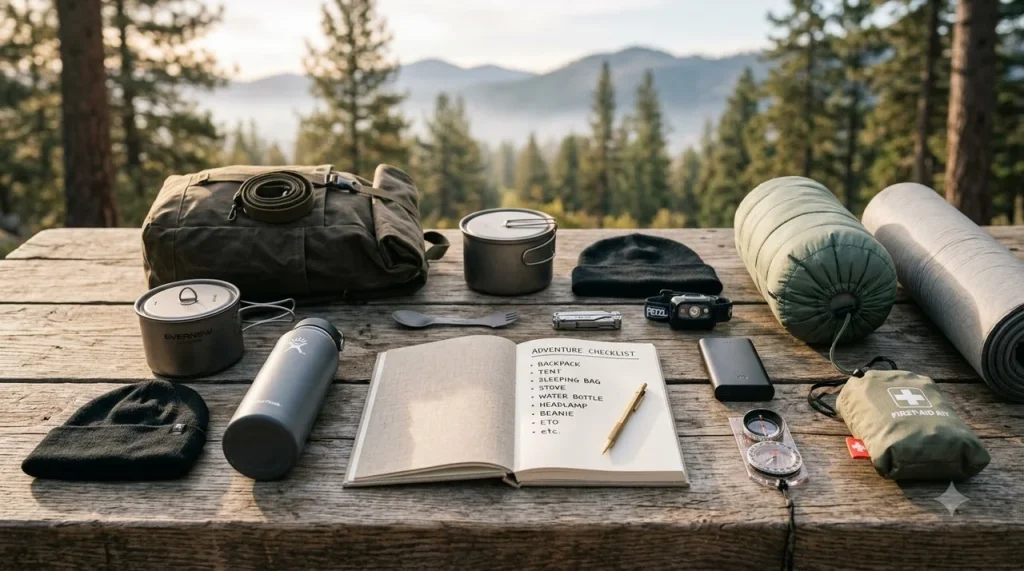
Use this handy home setup checklist to keep your gear closet ready for any weekend escape:
- ✔ Transparent storage totes with printed waterproof labels
- ✔ Silica gel packs placed inside electronic and fabric bins
- ✔ High-capacity wall hooks for backpacks and hydration packs
- ✔ Heavy-duty storage rack keeping all items at least 4 inches off the floor
- ✔ Dedicated battery and charging station for flashlights and power banks
Taking time to organize and maintain camping gear turns packing from a chaotic chore into a quick 15-minute routine, giving you more time to enjoy the trail.
Frequently Asked Questions
Where is the best place in the house to store camping gear?
The best place is a climate-controlled room, dry closet, or finished basement. Avoid uninsulated attics or damp crawl spaces, as extreme heat degrades tent waterproof coatings and dampness causes mildew.
How should I store self-inflating and air sleeping pads?
Store sleeping pads unrolled with the valves left wide open, either laid flat under a bed or hung in a closet. This maintains foam elasticity and allows internal moisture from your breath to dry completely.
How can I prevent funny odors in stored camping tents?
Always pitch and dry the tent completely before packing it away. If an odor develops, wash the tent using an outdoor-specific cleaner like Nikwax Tech Wash or an enzyme bath, then air dry completely out of direct sunlight.
References and Links
- REI Expert Advice: How to Clean, Repair, and Store Camping Gear
Comprehensive maintenance guides for outdoor tents, technical fabrics, and backcountry sleeping systems. - Leave No Trace Center for Outdoor Ethics: Gear Care and Preparation
Best practices for outdoor equipment stewardship, hygiene, and responsible camp setup.
👉 Read Next: Minimalist Camping Checklist: Essential Gear Guide