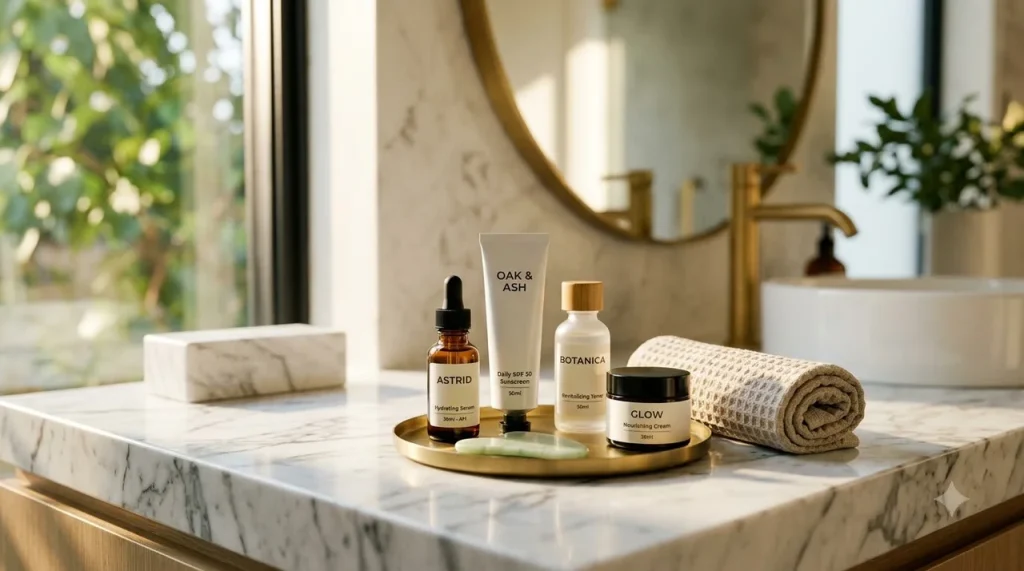
Why Less is Truly More When You Have Sensitive Skin
Quick Key Takeaway
When learning how to declutter your skincare routine for sensitive skin, your main priority is protecting and repairing the compromised skin barrier. Layering 10+ active ingredients overwhelms reactive complexions. A minimalist routine of gentle cleansing, barrier support, and daily mineral SPF stops chronic flare-ups fast.
If your bathroom counter resembles a chemistry lab with serums, acids, toners, and multiple exfoliants, your skin barrier is likely paying the price. Complex multi-step regimens often do more harm than good for reactive, sensitive skin types. Every additional product introduces potential allergens, preservatives, and conflicting active ingredients that trigger redness, dryness, and breakouts.
The golden rule for reactive skin is simple: simplify to amplify. By stripping down your regimen to core essentials, you allow your skin’s natural lipid barrier to heal, recalibrate, and retain moisture naturally without unnecessary chemical irritation.
5-Step Method to Declutter Your Skincare Routine
Ready to downsize your medicine cabinet? Follow this clear, step-by-step approach to safely streamline your daily regimen without triggering rebound flare-ups.
Pull every product from your vanity, drawers, and shower. Group them into categories: cleansers, toners, active serums, moisturizers, masks, and sunscreens.
Locate the Period After Opening (PAO) icon (open jar symbol). Toss anything open longer than 6 to 12 months, as degraded preservatives breed bacteria.
Set aside any formulas containing synthetic fragrance, denatured alcohol, essential oils (like citrus or lavender), and harsh physical scrubs.
Select one gentle non-foaming cleanser, one ceramide-rich barrier cream, and one broad-spectrum mineral sunscreen (SPF 30+).
Pause all exfoliating acids, retinoids, and vitamin C for two weeks. Reintroduce one targeted active ingredient at a time to monitor your skin’s tolerance.
Essential Ingredients to Keep vs. Formulas to Ditch
When deciding which products earn a permanent spot on your shelf, ingredient literacy is your best friend. Prioritize physiological lipids that match your skin structure and purge ingredients known to trigger neurosensory irritation.
Keep & Prioritize (Barrier Heroes)
- Ceramides (EOP, NP, AP): Rebuild intercellular cement
- Centella Asiatica / Madecassoside: Calms erythema & stinging
- Hyaluronic Acid & Glycerin: Pure hydration magnets
- Colloidal Oatmeal: FDA-approved skin protectant
- Zinc Oxide: Anti-inflammatory physical sun filter
Declutter & Discard (Barrier Disruptors)
- Synthetic Fragrance & Parfum: Leading cause of contact dermatitis
- High-Percentage Alcohol (SD / Denatured): Strips natural sebum
- High-Strength AHAs (Glycolic >7%): Causes micro-tears on thin skin
- Essential Oils (Eucalyptus, Peppermint): Sensitizing botanicals
- Sulfates (SLS / SLES): Alkaline cleansing agents that dry out skin
Pro Tip: Avoid buying multi-active hybrid serums (e.g., Vitamin C + Retinol + Niacinamide all in one bottle) while healing. When an irritation flare occurs, it is nearly impossible to identify the offending ingredient.
The Ideal Morning & Evening Minimalist Regimen
Once you have cleared out excess bottles, structuring your everyday routine becomes effortless. Here is the streamlined schedule recommended by dermatologists for hyper-sensitive and reactive skin types:
| Routine Phase | Product Type | Primary Function | Time Commitment |
|---|---|---|---|
| AM Step 1 | Lukewarm Water / Milk Cleanser | Rinses overnight sweat without stripping lipids | 30 seconds |
| AM Step 2 | Barrier Support Cream | Locks in hydration and shields against dry indoor air | 1 minute |
| AM Step 3 | Mineral Sunscreen SPF 30+ | Physical UVA/UVB defense without stinging eyes | 1 minute |
| PM Step 1 | Gentle Cleansing Balm or Lotion | Dissolves sunscreen and environmental debris | 1 minute |
| PM Step 2 | Nourishing Restorative Balm | Overnight cellular repair with panthenol & squalane | 1 minute |
This entire minimalist schedule takes less than 3 minutes morning and evening, saving both your wallet and your moisture mantle from daily distress.
Decluttering Checklist: Keep Your Vanity Free from Relapse
To prevent clutter from creeping back onto your bathroom counters, adopt these long-term maintenance rules:
Sensitive Skin Organization Checklist
- The “One-In, One-Out” Rule: Never purchase a new moisturizer or serum until your current bottle is completely empty.
- Mandatory 48-Hour Patch Test: Test any new product on your inner forearm or jawline before applying it across your entire face.
- Designate a Seasonal Drop Box: Keep only current season formulas on display; store backup items out of sight.
- Say No to Free Sample Overload: Avoid collecting promotional mini sachets containing untested fragrances that tempt impulsive usage.
Mastering how to declutter your skincare routine for sensitive skin is more than an aesthetic tidying project; it is a clinical strategy that protects your skin from chronic contact dermatitis, rosacea flare-ups, and barrier fatigue.
Frequently Asked Questions
How long does it take for a damaged skin barrier to heal after decluttering?
On average, the epidermis completes a full turnover cycle every 28 to 30 days. Most people with sensitive skin notice significant reductions in redness and burning sensations within 10 to 14 days after adopting a stripped-down minimalist routine.
Can I still use anti-aging products with sensitive skin?
Yes, but approach them cautiously. Instead of potent retinoids or high-strength ascorbic acid, opt for gentle alternatives like bakuchiol, peptides, or low-strength encapsulated retinal applied only 1 to 2 nights per week over a generous layer of moisturizer (the sandwich method).
What is the safest way to dispose of old skincare products?
Empty remaining liquids or creams into your household trash (never pour heavy active chemicals or microbeads down water drains), rinse the containers thoroughly with warm water, and place clean glass or plastic bottles into your local municipal recycling bin according to recycling codes 1 or 2.
References and Links
- American Academy of Dermatology (AAD) – Sensitive Skin Care
Evidence-based guidelines on gentle cleansing, barrier protection, and managing contact dermatitis. - National Eczema Association – Understanding Product Ingredients
Comprehensive resource for identifying safe ingredients and avoiding common chemical irritants. - National Rosacea Society – Skin Care & Cosmetics Guidelines
Clinical insights on minimizing skincare steps to reduce facial redness and hyper-reactivity.
👉 Read Next: Minimalist Camping Checklist: Essential Gear Guide