The Morning Showdown: Home Espresso Machine vs Capsule Coffee
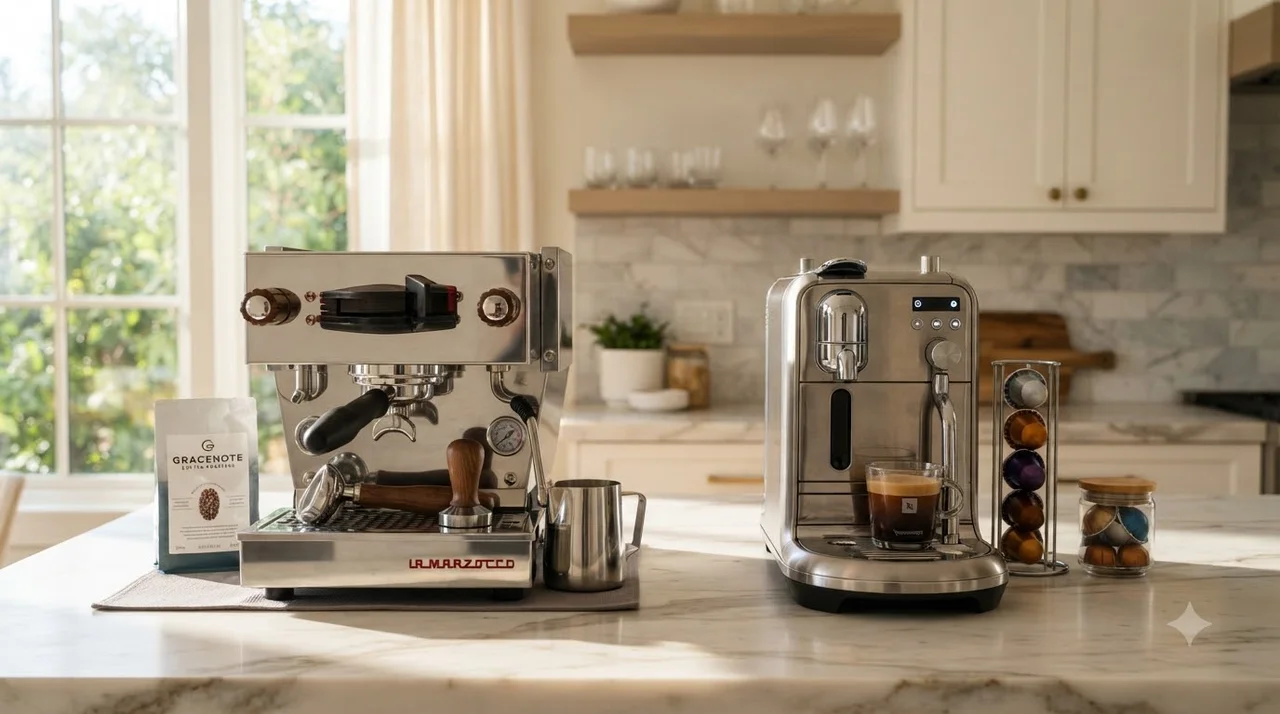
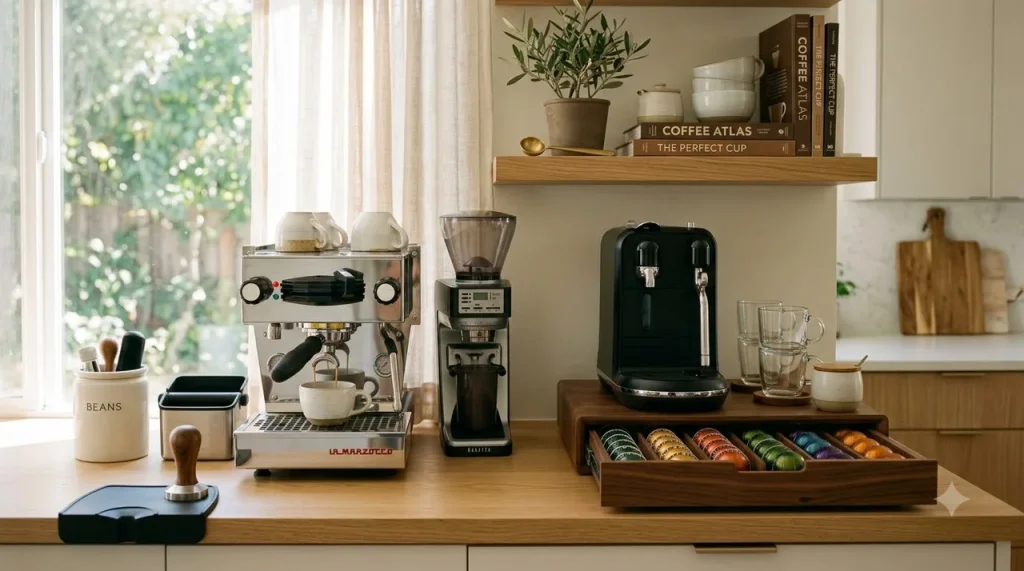
Quick Answer: When weighing a home espresso machine vs capsule coffee, capsule brewers (like Nespresso or Keurig) win on zero-effort speed, compactness, and push-button consistency. However, a traditional home espresso machine delivers authentic café-quality microfoam, rich crema, infinite bean customization, and saves hundreds of dollars annually for regular coffee drinkers.
Every American coffee enthusiast eventually faces the classic morning debate: should you invest in an authentic manual or semi-automatic espresso setup, or rely on the effortless speed of single-serve pod capsules? Navigating the balance between a relaxed barista ritual and a rushed 7:00 AM weekday commute is crucial for choosing your perfect kitchen counter companion.
While both systems produce a concentrated coffee base for lattes, flat whites, and Americanos, they operate on completely distinct philosophies of convenience, taste complexity, upfront investment, and long-term operating costs.
Cost Analysis: Upfront Equipment vs Ongoing Cost Per Cup
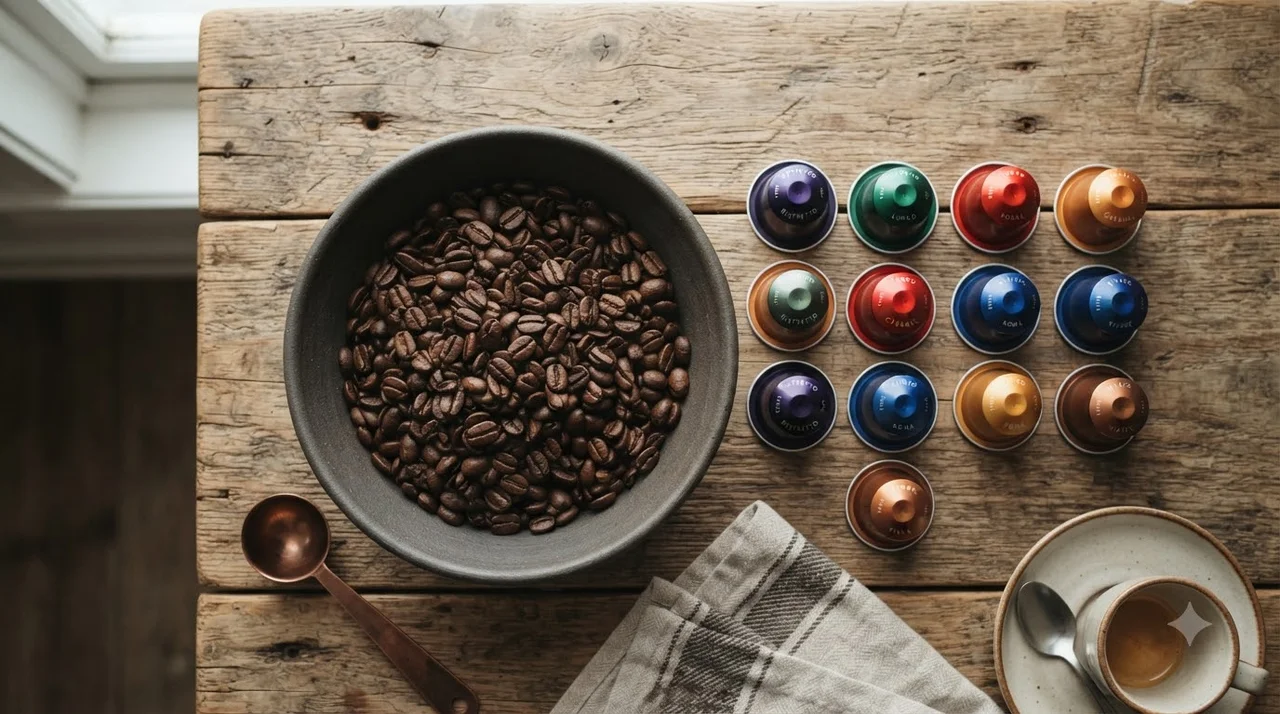
The initial sticker price often tricks buyers. While pod systems seem remarkably cheap to purchase, the recurring price per shot tells an entirely different financial story over a multi-year timeline.
Budget Insight: If your household brews 2 or more cups daily, investing in a standard home espresso machine pays for itself in less than a year and a half, saving upwards of $500 each subsequent year in whole bean savings alone.
Flavor Profile & Crema: True Craftsmanship vs Pod Extraction
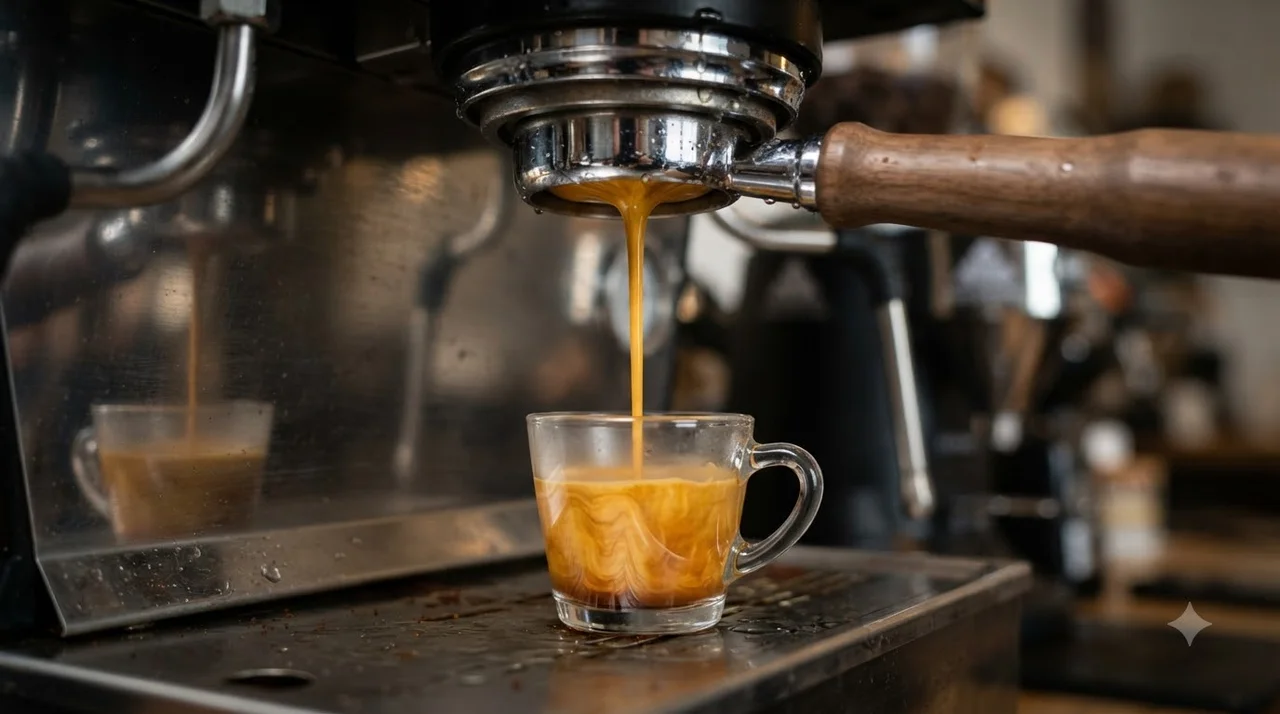
The distinction in cup quality between a home espresso machine vs capsule coffee boils down to extraction physics and coffee freshness. Freshly roasted coffee contains aromatic CO2 and volatile organic compounds that degrade rapidly once ground.
Semi-Automatic Espresso
- Extracted with 9 bars of steady pressure through 18–20g of fresh grounds.
- Thick, velvety golden-brown crema with dynamic flavor notes (floral, fruity, chocolate).
- True commercial steam wand for silky microfoam and latte art.
Capsule System Extraction
- Contains pre-ground, nitrogen-flushed coffee (5–7g dose).
- Generates a frothy aerated foam rather than natural emulsion crema.
- Consistent and enjoyable, but lacks single-origin nuanced complexity.
Morning Routine & Workflow: Step-by-Step Practical Comparison
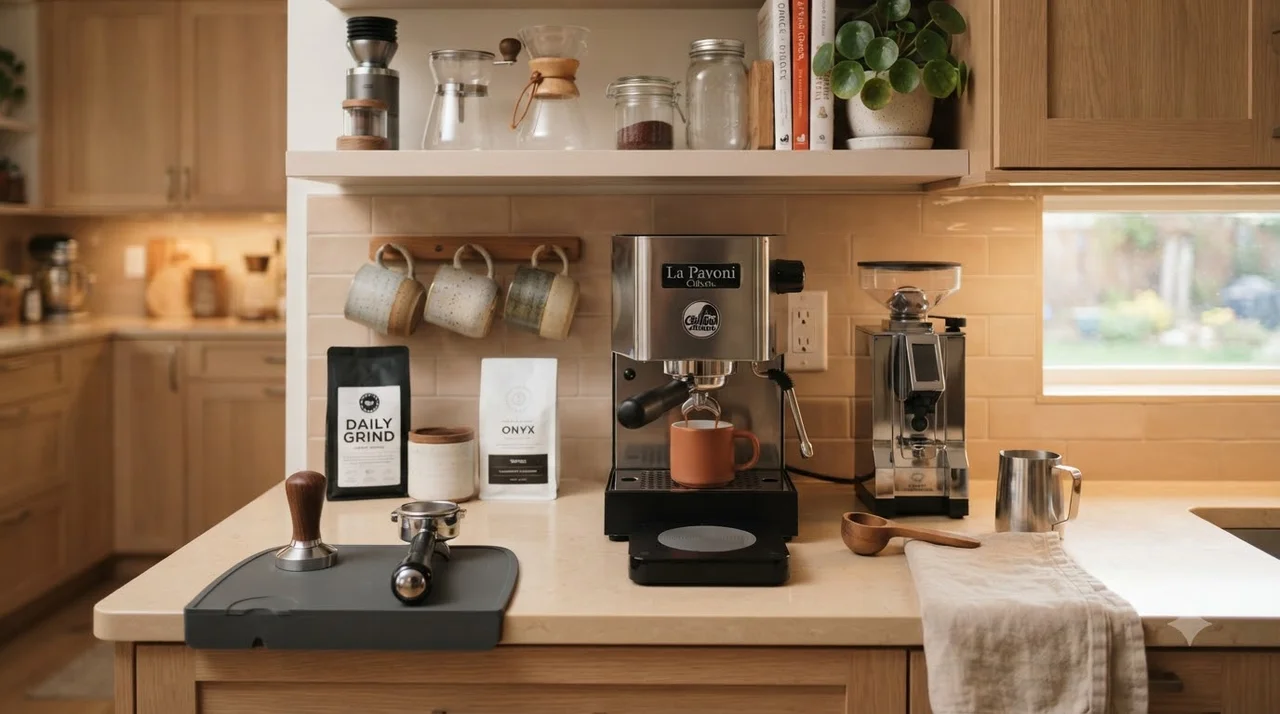
How do these machines integrate into a hectic morning routine? Here is how your 7:00 AM coffee preparation looks across both formats.
Capsule machines heat in 20–30 seconds. Semi-automatic espresso machines take 3 to 15 minutes to stabilize portafilter and boiler temperatures.
Capsule users simply drop a pod into the slot. Espresso users weigh beans, grind, distribute, and tamp with 30 lbs of level pressure.
Capsule delivers a shot in 25 seconds at a single touch. Espresso machine pulls a 25–30 second double shot, followed by manual milk frothing with a steam wand.
Capsule machines eject the pod automatically into an internal bin. Espresso machines require knocking the puck, rinsing the portafilter, and wiping down the steam wand.
Maintenance, Longevity, and Environmental Impact
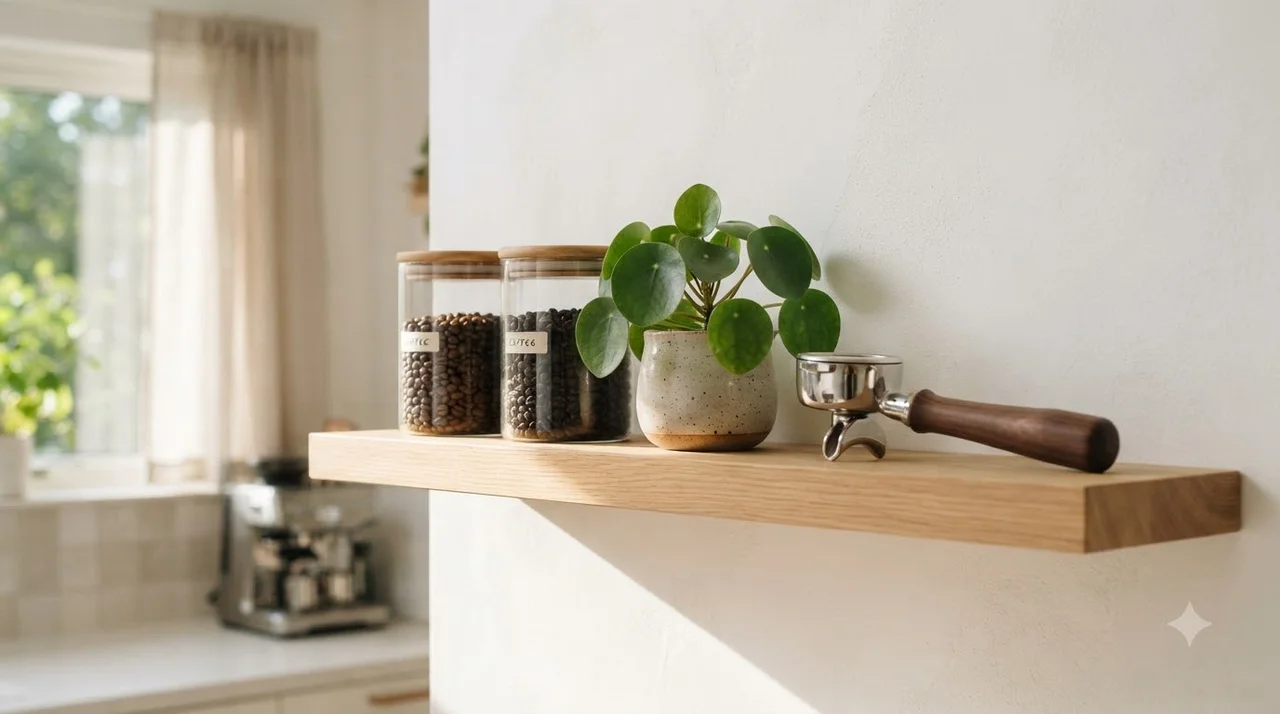
Beyond the coffee taste, living with these appliances every day involves long-term considerations like kitchen maintenance and sustainability.
Environmental Warning: Millions of single-use aluminum and plastic capsules end up in municipal landfills each year. While recycling bags exist, whole bean espresso generation creates 100% compostable organic grounds with zero packaging waste.
From a durability perspective, reputable semi-automatic machines from brands like Breville, Gaggia, and Rancilio feature replaceable gaskets, solenoid valves, and metal components built to last 7–10+ years with proper descaling. Capsule machines are predominantly constructed with plastic internals that are difficult to repair, often resulting in replacement every 3 to 5 years.
Decision Checklist: Which Setup Fits Your Lifestyle?
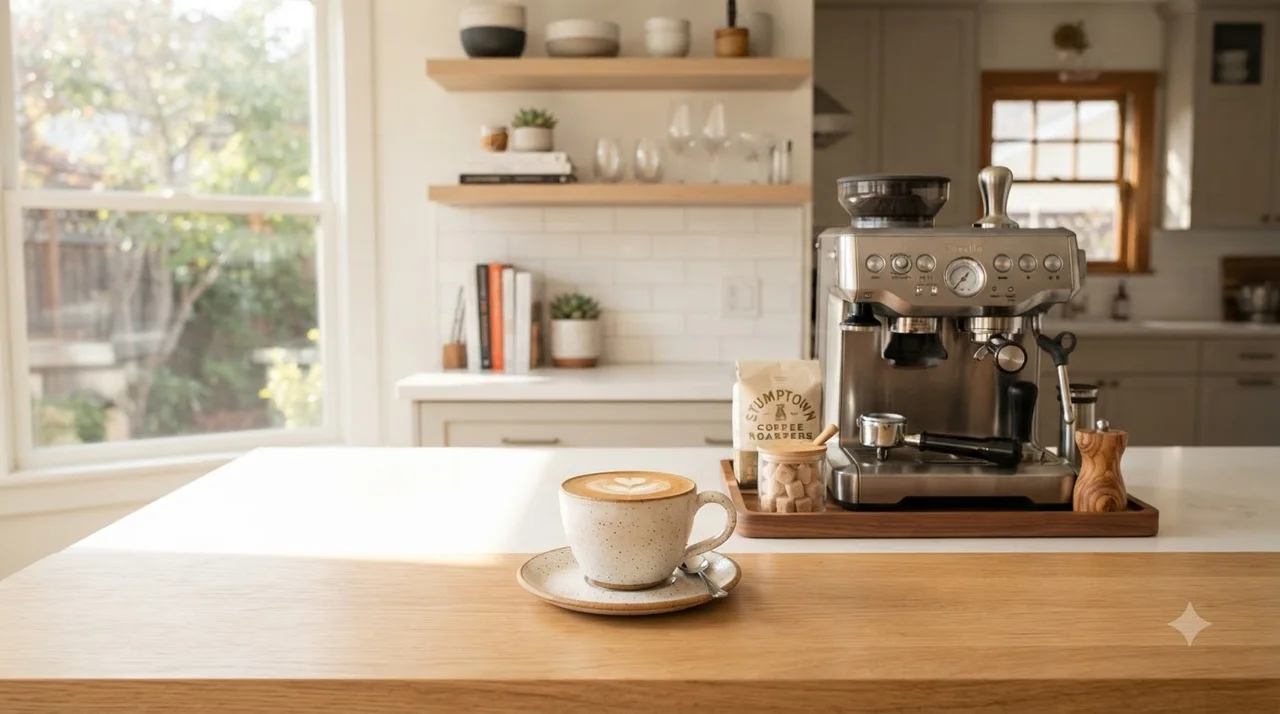
To determine your final choice in the home espresso machine vs capsule coffee duel, check off the lifestyle statements that match your daily habits:
Choose a Capsule Coffee Machine If:
- ✔ You have under 3 minutes to make coffee before leaving for work.
- ✔ You live in a compact apartment with minimal counter space.
- ✔ You want zero mess, no grinding calibration, and one-button operation.
- ✔ Multiple household members prefer different flavors on demand.
Choose a Home Espresso Machine If:
- ✔ You drink 2 or more cups per day and want to minimize recurring bean costs.
- ✔ You enjoy the artisanal craft of dialing in grinds, tamping, and steaming microfoam.
- ✔ You demand authentic café-quality taste and buy specialty single-origin beans.
- ✔ You care deeply about eliminating single-use pod packaging waste.
Frequently Asked Questions
Is capsule coffee considered real espresso?
Capsule machines brew under high pump pressure (often 15–19 bars), but because they use a smaller dose (5–7 grams of pre-ground coffee) compared to a traditional 18-gram double basket, the resulting beverage is lighter in body and intensity. It produces an espresso-style drink rather than a true commercial espresso shot.
How much money can you save by switching from pods to an espresso machine?
A typical household consuming two cups daily spends roughly $700 to $900 annually on pods ($1.00–$1.25/pod). Switching to premium whole beans ($0.25/shot) lowers annual coffee expenses to around $180 to $200, yielding yearly savings of over $500.
How steep is the learning curve for a home espresso machine?
Modern hybrid semi-automatic espresso machines with built-in grinders (like the Breville Barista series) take only 2 to 3 days of practice to dial in grind size and pull balanced, rich shots with minimal frustration.
Are reusable stainless steel pods a good middle ground?
Reusable capsules allow you to use fresh ground coffee inside your pod machine, reducing plastic waste and cost. However, due to capsule volume limits, they usually produce a milder shot compared to dedicated espresso portafilters.
References and Links
- Specialty Coffee Association (SCA) Standards
Official industry guidelines for water temperature, brew ratio, and extraction standards for espresso. - Nespresso Official Sustainability & Recycling Program
Details regarding single-serve aluminum pod recycling systems and environmental initiatives.
👉 Read Next: Cozy Coffee Station at Home: Complete Essential Buying Guide
👉 Read Next: Smart Morning Habits to Maximize Daily Productivity